The Perfect Summer Saturday Is a Cricket Myth
Village cricket in changeable weather can still make a satisfying Saturday, with practical ways to adapt the matchday without pretending rain is harmless.
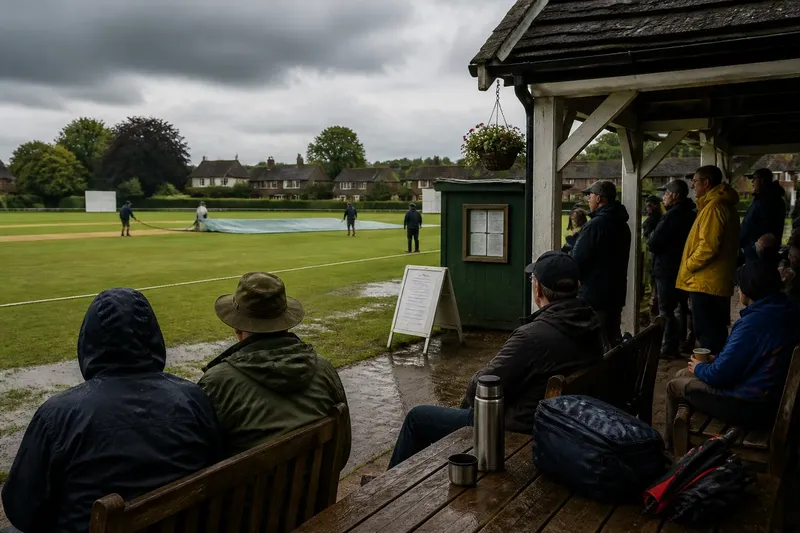
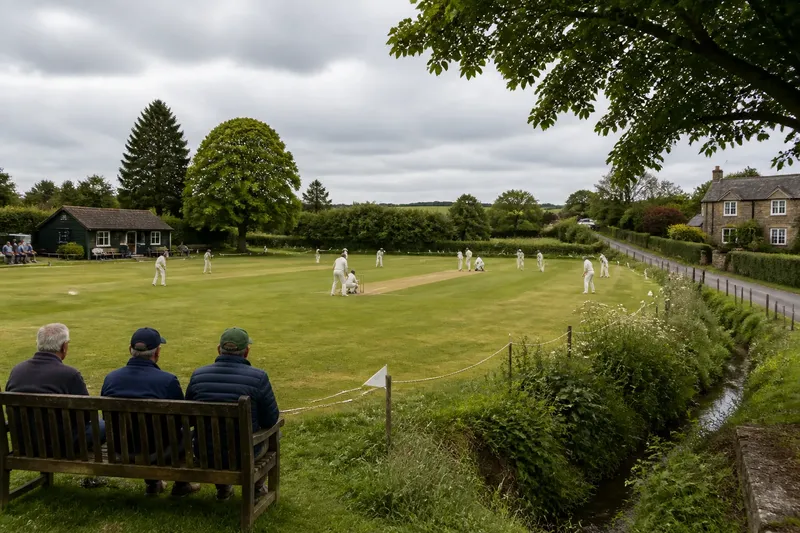
Village cricket in changeable weather begins with a familiar pause: the captain looks at the low cloud, the square looks darker than it did at breakfast, and nobody can tell whether the afternoon will clear. A cloudless day is pleasant, but it is not the admission ticket to a good Saturday. The season has its own weather, and a match can feel complete without behaving like a postcard.
That does not mean rain is secretly wonderful. Wet outfields, unsafe footing and repeated uncertainty can spoil a day. The useful distinction is between weather that changes the shape of the occasion and conditions that make play unsuitable. A club cannot control the forecast. It can make the space around the match less dependent on getting the forecast right.
What does a changeable forecast actually change?
Start with the practical questions rather than the sky’s general mood. Is the pitch fit for play? Can players move safely? Is the outfield likely to drain, or does water sit in the low ground? Who is responsible for assessing the surface, and how will spectators hear about a delay or cancellation?
Those are decisions for the club’s appointed officials, not a vote conducted from the car park. The groundskeeper or match officials can assess conditions on site and follow the relevant competition rules. Visitors can check the club’s usual channel for updates, then avoid treating a grey horizon as a formal decision.
Weather also alters the rhythm of a matchday. A shower may hold up the start, leave a brief lull between spells of play or bring an early finish. That can be frustrating, especially for people who have arranged lifts or made the tea. But a Saturday need not be judged solely by whether the innings unfolded to plan.
How can the club leave room for a different sort of day?
A useful plan separates what the club can promise from what it cannot. It can communicate where updates will appear, keep a dry place available for players and visitors, and make clear who will decide whether conditions allow play. It cannot promise an uninterrupted match, or turn a sodden boundary into a safe walking route by optimism alone.
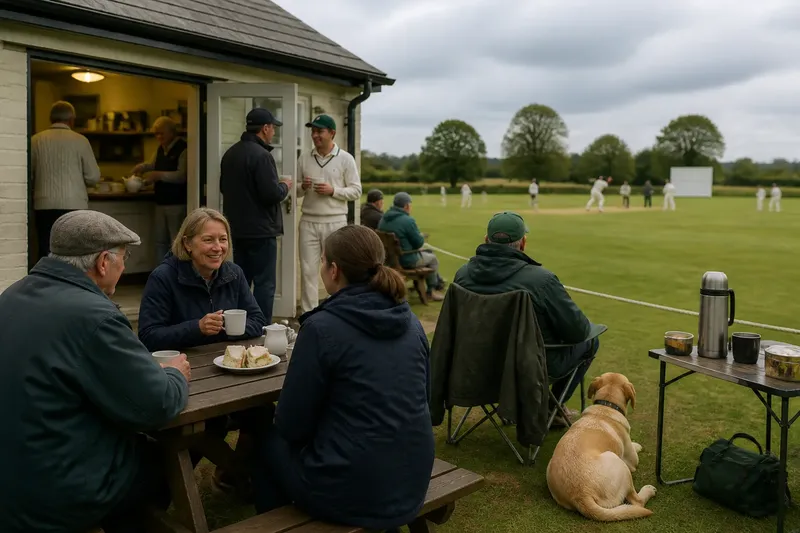
For spectators, a small amount of preparation is more sensible than elaborate weather-proofing. A waterproof jacket, shoes suited to muddy paths and a bag that can be closed keep the essentials manageable. A flask can help if the tea interval shifts, though it should not become a reason to wander onto the playing area or block pavilion doors.
Clubs can also make the pause legible. A brief announcement at the pavilion, a clear sign pointing to shelter and a named person to ask can prevent the awkward drift in which everyone waits for somebody else to explain what is happening. The point is not to stage a separate entertainment programme. It is to let people know whether they are waiting, leaving or simply finding a dry seat.
What happens when the Saturday refuses to behave?
Imagine a wholly invented village fixture in which the home side expects a straightforward afternoon. The match is due to start under a bright patch of sky, but cloud thickens before the toss and a shower passes over the ground. The captain and officials pause for the proper inspection rather than asking players to judge the surface by how it looks from the pavilion steps.
In this imagined situation, the surface is not ready immediately, so the start is delayed. The club posts a short update on its usual message channel and puts a note near the entrance, directing visitors to the pavilion rather than leaving them to gather beside the square. A volunteer keeps the tea arrangements flexible; the scorers keep their materials dry; spectators who need to leave can do so without waiting for an unofficial forecast from the boundary.
Suppose conditions later allow a shortened match, and another shower interrupts it before the result can be settled. The day still has a discernible shape: uncertainty, a spell of play, a pause and a decision to stop. Players have had cricket, visitors have had company, and the club has not had to pretend the disruption was charming. The expected result is not a perfect afternoon but a clearer, less needlessly confusing one.
The useful lesson in that invented scenario is modest. Communication can make a weather-affected day easier to understand, but it cannot redeem unsafe conditions or manufacture a full match. If the decision is to abandon play, a clear explanation and a definite update about any rearrangement are more considerate than keeping people in limbo.
What can spectators do during a delay?
First, check the club’s stated channel before setting off and again if conditions change. If the message is unclear, ask a club official rather than relying on a neighbour’s impression of the radar. Forecast apps such as the Met Office app or BBC Weather can help you prepare, but a general forecast cannot tell you whether a particular square is fit for play.
At the ground, use the areas the club has made available. A soaked bank may look invitingly empty and still be slippery; access arrangements are there for a reason. Keep children away from the playing surface during an inspection, and do not crowd the officials who need space to assess it.
- Bring a waterproof layer that can be carried comfortably if the afternoon clears.
- Wear footwear with a sensible grip for the route from the entrance to the pavilion.
- Keep your phone charged enough to check a match update or arrange a lift.
- Ask where spectators should wait before settling beside a gate or narrow path.
- Have a flexible plan for leaving if the delay becomes an abandonment.
These are not ways to defeat the weather. They simply reduce the amount of guesswork placed on the person standing in the rain with a paper cup and no idea whether the next announcement is imminent.
Does the weather change the character of village cricket?
It often changes the details people remember. On a clear afternoon, the rhythm may be set by the innings and the steady movement between pavilion, scorebox and boundary. On a broken day, the memories may collect around the interruptions: a temporary retreat, the sound of rain on the pavilion roof, a restart that catches everyone still putting away their coats.
That does not make discomfort a local tradition worth defending. A cold spectator is not automatically having a more authentic experience than a comfortable one, and nobody needs to romanticise a cancelled fixture. The point is that weather belongs to the season’s texture, alongside the shifting light and the gradual change in how the ground feels from one week to the next.
For a club, there can be value in treating an interrupted day as part of the ordinary calendar rather than as a failure of organisation. A short, plain update is better than grand promises; a sensible decision is better than prolonging a match because people have travelled. The culture comes from how the club handles the uncertainty, not from claiming every shower is a blessing.
What do people usually want to know about village cricket in changeable weather?
Should I travel to the ground if rain is forecast?
Check the club’s latest update before leaving, particularly if the forecast suggests persistent rain. If there is no update, contact the club through its published channel rather than assuming either that the match is on or that it has been cancelled.
Who decides whether play can start or resume?
The appointed match officials assess whether conditions are suitable under the competition’s rules, with the ground’s condition central to that judgement. Spectators should leave the decision to them rather than treating a gap in the rain as evidence that play can safely continue.
What should I bring to a rain-affected match?
A waterproof layer, practical footwear and a phone for updates cover most ordinary needs. Bring only what you can keep with you without obstructing pavilion entrances or the movement of players and officials.
Is a match still worth attending if it might be shortened?
That depends on your journey, comfort and appetite for uncertainty. A shorter spell of play may still make for a satisfying visit, but a long trip with no clear update may not suit everyone.
When is it better to call the day?
When officials decide the ground is not suitable, the sensible response is to accept the decision and follow the club’s information about what happens next. Local rules, competition requirements and the condition of the playing surface govern the details; the club or competition organiser can explain any rearrangement. Spectators should not cross barriers or ask players to continue on a surface judged unsafe.
A good Saturday need not survive every shower. It does need a fair decision, useful communication and room for people to make their own plans when the match changes or ends early. That is a more realistic standard than perfect sunshine, and village cricket in changeable weather can meet it without calling the rain picturesque.
So check the update, pack for the sky as it is rather than the sky you ordered, and let the people responsible assess the ground. If play happens, enjoy the cricket. If it does not, a clear, considerate abandonment is still a properly handled club day; the clouds need not be persuaded to provide a better ending.