A First Village Cricket Match, With Time to Look Around
A first village cricket match is easier to enjoy when you know what to notice, when to arrive and how to follow the day without tracking every ball.
A first village cricket match can leave you wondering whether you have missed something important before you have even found a place to sit. The answer is usually no: the day has a rhythm beyond the ball, and you can follow it at your own pace.
Newcomers often run into the same small snags. They arrive unsure where to stand, cannot tell what the players are waiting for, or feel they ought to understand every delivery. A few simple ways of looking around make the match easier to read without turning it into homework.
Where should you go when you arrive?
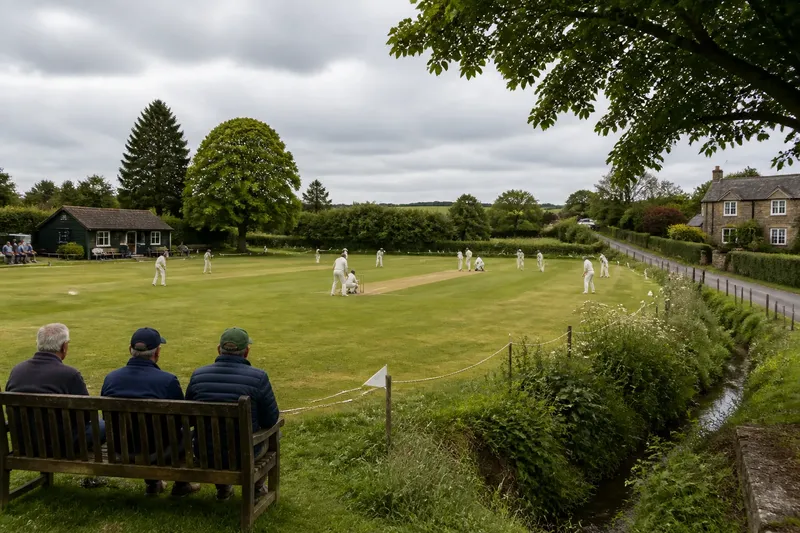
The first difficulty is often choosing where to settle. A village ground may have a pavilion, a low rope or painted boundary, and no obvious entrance beyond the gap beside the car park. People may already be gathered in familiar spots, which can make the whole place seem more private than it is.
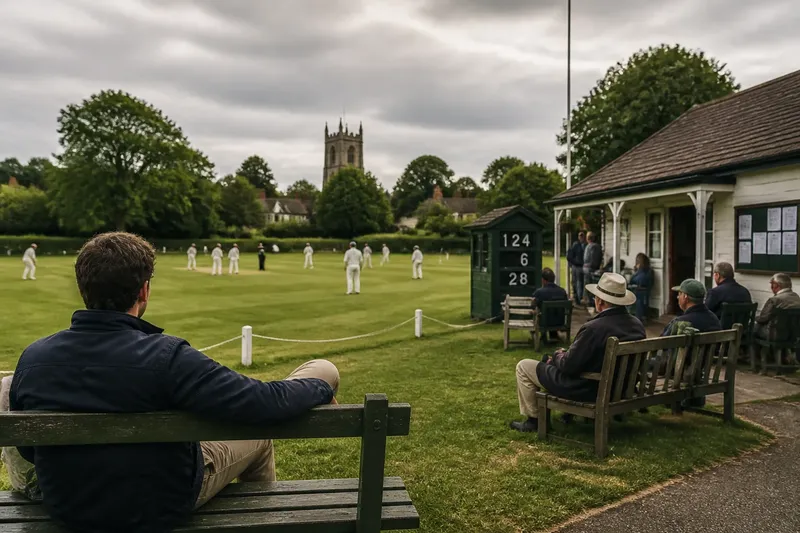
Look for the scorer’s table, the pavilion door or a small group near the boundary, then ask where spectators usually sit. A simple “Is it all right to sit here?” is enough. If you want to watch the whole ground rather than peer through a knot of players, choose a spot with a clear view of the pitch and room to move.
Arriving before the match begins gives you time to notice the setting: the pavilion’s noticeboard, the sightline to the church tower or the hedge that marks one edge of the field. These details help you understand the ground as a place used by a club, not merely a stage for the next ball.
Why does the game seem to pause so often?
At first, cricket can look like a sequence of unexplained waits. Players change ends, fielders move, the bowler walks back, and an umpire may speak to someone. Some pauses are ordinary parts of the game; others come from a lost ball, a change in light or a brief interruption.
Rather than treating every gap as a delay, use it to see how the match is arranged. Notice who sets the field, who collects the ball, and whether the captain talks with the bowler before play resumes. The scorer may mark the scorebook while the players reset. You do not need to know the technical reason for each adjustment to see that the game is being managed.
If you are unsure whether play has stopped for a moment or for longer, follow the players and ask a nearby spectator. Most people can explain the immediate situation without giving you a lecture on the laws of cricket. The boundary is not a great place to wander while a delivery is being bowled, so move between overs or during a clear break.
How can you follow the match without counting every ball?
The apparent puzzle is that each delivery matters, yet keeping track of every one can distract from the day. Start with the larger changes: who is batting, who is bowling, whether the score is moving, and how the fielders respond when the ball is hit.
Watch one short passage of play with a single question in mind. Is the bowler trying to make the batter reach forward, or keeping the ball away from the bat? Does a fielder move closer after a quiet over? These are clues, not a quiz. If the ball is hit to the boundary, you can enjoy the chase and the fielders’ return without knowing the exact score.
Say you arrive midway through an over and cannot tell which batter is on strike. You could watch the next delivery, then ask a neighbour during the pause who is bowling and what the score is. The expected result is modest but useful: you regain enough context to follow the next passage, rather than trying to reconstruct the whole innings.
What should you do when the interval feels awkward?
The interval can catch a newcomer off guard. The players leave the field, spectators drift towards the pavilion, and you may be unsure whether to stay put or join them. It is simply a change in the day’s rhythm, not a test of club membership.
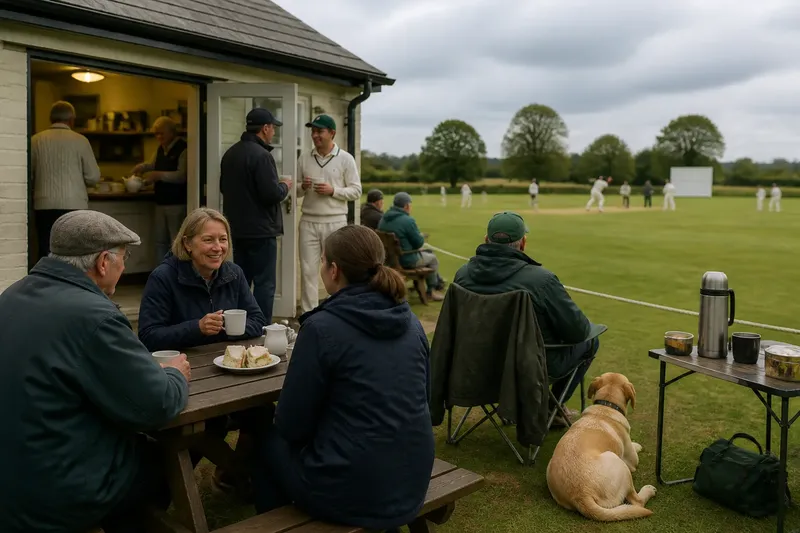
Use the break to stretch your legs, look at the scorebox or ask how long remains before play resumes. If refreshments are available, check where the queue begins and whether the service is for spectators as well as players. You can also stay by your seat and watch the ground empty for a while; the pause itself is part of the matchday texture.
Imagine you have brought a notebook because you want to remember the ground, but the interval arrives and you feel conspicuous writing. Put it away, take a short walk along the public side of the boundary, and note one detail afterwards: perhaps the sound of the mower beyond the hedge or the way the pavilion doors open onto the field. That gives you a memory without making the afternoon an assignment.
What do newcomers ask about a village match?
Do I need to understand cricket before I go?
No. Knowing the broad aim—batters score runs while the fielding side tries to dismiss them—is enough to begin. You can pick up terms as they become relevant, or simply follow the movement of the players.
Is it rude to ask someone what is happening?
A brief question during a pause is usually welcome, especially if you ask about the moment in front of you. Avoid calling across the field during play, when players and officials need to concentrate.
Can I leave before the match ends?
Yes. A village match can occupy much of the day, and spectators come and go. If you are near the rope, wait for a break in play before walking across the sightline.
What should I notice besides the score?
Look at how people use the ground: where children gather, who keeps the score, and how players speak to one another between overs. Those small habits often tell you more about the club’s character than a running tally does.
How do you leave with a sense of the day?
Before heading off, take a last look at the pitch and the places around it. You might notice that the light has shifted, the spectators have moved to follow the shade, or someone is returning chairs to the pavilion. These ordinary changes give the afternoon its shape.
A first village cricket match need not be mastered to be enjoyed. Choose a comfortable place, follow the pauses as well as the play, and let curiosity do the work. If you remember one useful detail—the route to the pavilion, a fielder’s position or the sound of the scorebox—you have already found a way into the day.